Plumber Near Me: Questions to Ask About License Status
When someone searches for a plumber near me, the first concern is usually speed. Water is leaking, the drain is backing up, the water heater is acting up, or a tenant is waiting for an answer. In that moment, it is easy to focus on price and arrival time and skip the question that matters most at the start: is this person properly licensed for the work?
That question is not just paperwork. In Hawaii, plumbing work is regulated by the state, and that changes how a homeowner, property manager, or business owner should hire. A plumber Honolulu residents call for a quick fix may be handling work that requires a permit, inspection, or a level of accountability that only comes with an active license. A plumber Oahu property owners rely on for a larger repair may also need to be tied to a properly licensed contractor, depending on the scope of the project.

The practical point is simple. License status tells you whether the person or company should be doing the work in the first place, whether the license is current, and whether there is disciplinary history worth reviewing before you let anyone touch your plumbing system.
Why license questions matter before the first wrench turns
People sometimes treat licensing like a technicality. On real jobs, it is rarely a technicality.
If you are dealing with water heater repair, drain cleaning, sewer line repair, or leak detection, the visible problem can be only part of the story. A leak behind a wall can spread damage. A drain issue can point to a larger defect. A sewer line problem can become disruptive and expensive very quickly. If the work goes beyond a very small task, Hawaii’s rules matter. The state advises consumers to hire a licensed contractor for projects over $1,500 in labor and materials, or for any project that needs a building, electrical, or plumbing permit.
That threshold is useful because many owners underestimate how quickly plumbing work crosses it. A straightforward repair can become a larger project once walls are opened, fittings are replaced, or code issues come into view. If a permit is required, the work is not something to treat casually. Honolulu’s rules also make clear that plumbing and drainage work authorized by permit is inspected for compliance, and local permitting guidance states that plumbing work must be performed by contractors licensed by the State of Hawaii.
That is why license status should be part of the first phone call, not a question saved for later if something feels off.
The first question: what exactly is your license status today?
Notice the wording. Not “are you licensed?” in a vague, conversational sense. Ask what the current license status is today.
There is a reason to be precise. In Hawaii, consumers can verify a plumber’s license status, expiration date, and disciplinary history through the state’s official license search tools. That means a contractor or plumbing professional should be comfortable giving you the information needed for verification. If someone becomes evasive, says the license is “in process,” or insists that a business card should be enough, that is worth slowing down for.
A current license status matters because expiration is not a small detail. Hawaii’s contractor licenses renew on a set schedule, and the state has published specific renewal timing for contractor licensing periods. A license that was valid in the past is not the same as a license that is active now. In practice, this can become an issue around renewal periods, when businesses are busy and customers assume everything is current.
It is also worth listening closely to how the answer is framed. Some companies speak only in terms of the business name. Others refer to “my guy” or “my plumber” without clearly stating who holds the license and who will actually perform the work. Hawaii’s guidance is important here: electrical and plumbing contractors must employ licensed electricians and plumbers to perform the actual electrical or plumbing work. That means the person doing the plumbing work is not a detail to gloss over.
Ask who will actually perform the plumbing work
This is the question many customers miss.
A company may advertise broadly, book quickly, and send a tech out the same day. That alone does not tell you whether the person arriving is the properly licensed individual for the work. The state’s guidance says plumbing contractors must employ licensed plumbers to perform the actual plumbing work. So ask directly who will be doing the work on site, and whether that person is the licensed plumber assigned to the job.
That question is especially important when the service requested sounds routine. Drain cleaning, leak detection, and water heater repair can all seem like standard calls, but the work on site may expand. A clogged line may reveal a damaged section. A water heater issue may involve visible leakage, loose connections, or corrosion. Even the U.S. Environmental Protection Agency recommends regular inspection of water heaters for leaks, loose connections, corrosion, and related issues. Once those conditions are present, the job can move beyond a quick adjustment.
For a homeowner, the simplest version of this question is: who is coming, and are they licensed to perform this plumbing work? For a property manager or a commercial plumber relationship, the more useful version is: who is the licensed person assigned to this site, and how is that documented within your company?
A solid company will not be surprised by the question.
Ask whether the license is active, expired, or subject to discipline
Consumers often verify only the existence of a license, when the real issue is status.
A license can exist in records and still raise concerns. The official search tools in Hawaii let consumers check whether a license is active, when it expires, and whether there is disciplinary history. That matters because discipline is not automatically disqualifying in every case, but it absolutely belongs in your decision-making. If there is a record, you want to understand what happened, how long ago it occurred, and whether it is relevant to the type of work you are hiring for now.
This is where judgment comes in. If you are hiring an emergency plumber at night for an immediate shutoff or damage-control situation, you may not have time for a deep review before the first visit. Even then, you can still verify status as soon as possible, especially before authorizing additional work beyond the immediate emergency. On the other hand, if you are comparing bids for a commercial plumber contract or a larger sewer line repair, there is no reason to skip that review.
The quality of the answer matters, too. A professional who is used to working properly will usually answer cleanly and without irritation. They know customers have a right to ask.

Ask whether the job requires a permit
This single question often reveals how seriously a contractor treats compliance.
Hawaii advises consumers to hire a licensed contractor for any project that needs a building, electrical, or plumbing permit. In Honolulu, plumbing and drainage work authorized by permit is inspected for compliance. Those are not abstract rules. They affect cost, scheduling, inspection timing, and sometimes whether a repair can be closed up the same day.
A good plumber should be able to tell you whether the planned work appears to require a permit, or whether the scope may reach that point once conditions are uncovered. If the answer is an immediate, blanket “no permit needed” before anyone has looked at the job, that is not reassuring. Plumbing work is too varied for that kind of reflex answer to inspire confidence.
This point comes up often with water heater repair and sewer line repair. Customers may think they are authorizing one narrow fix, while the contractor knows the work may involve permanent plumbing changes. Honolulu’s permitting guidance also notes that permit valuation includes plumbing and other permanent work when calculating fees. That does not mean every plumbing call needs a permit, but it does mean the permit question should be part of an honest early conversation.
If you own a rental, manage a retail space, or run a small facility, ask another practical follow-up: if a permit is required, who is responsible for pulling it and coordinating inspections? You want that answer before the work starts, not when the bill arrives.
Ask how the company handles continuing competency and renewals
Customers do not need a seminar on regulatory administration, but they do need to know whether the company treats licensing as a living obligation rather than a box checked years ago.
Hawaii currently requires licensed plumbers on active status to show proof of continuing competency in the 2021 Uniform Plumbing Code for the licensing period running from July 1, 2024 through June 30, 2027. That tells you something useful even if you never read a code book yourself. Plumbing standards are not frozen in time. Active license status is tied to ongoing requirements.
That creates a sensible question for any plumber Honolulu or plumber Oahu customer is considering: how do you stay current on renewal and competency requirements? You are not trying to trap anyone. You are testing whether the business takes the responsibility seriously.
For contractor licenses, Hawaii also uses a regular renewal cycle, with published deadlines for on-time renewal. Again, the practical concern is straightforward. A reputable plumbing business should know when its licensing obligations renew and should be able to speak clearly about staying current. If the answer is vague, defensive, or delegated to “someone in the office” with no confidence behind it, that tells you something about the operation.
What to listen for when the answers are vague
Most customers can tell when a conversation feels slippery, even if they cannot immediately explain why. In plumbing, that instinct is worth trusting.
A strong answer usually sounds specific. It identifies the licensed business, the person performing the plumbing work, the current status, and whether permit issues may apply. A weak answer tends to blur those lines. It leans on years in business, general reputation, or urgency. Experience matters, but it does not replace a current license.
Here are five questions worth asking plainly:
- Is your plumbing license active right now?
- Who will perform the actual plumbing work on site?
- Can I verify your license status and expiration through the state’s official search tool?
- Does this job require a plumbing permit or inspection?
- Is there any disciplinary history I should know about before hiring you?
That short set of questions can save a great deal of trouble. It also changes the tone of the conversation. Companies that cut corners often prefer customers who never ask.
Why this matters even more for urgent service calls
An emergency plumber is hired under pressure. A ceiling is dripping. A tenant cannot use a bathroom. A business is trying to stay open. In that setting, customers are understandably focused on stopping damage first.
Speed matters, but emergency conditions do not erase licensing requirements. They simply make it harder for customers to think clearly. The best approach is to separate immediate stabilization from broader authorization. If someone needs to shut off water, assess visible damage, or make the area safe, that is one thing. Approving expanded repairs, opening walls, or committing to substantial follow-on work is another.
This distinction is useful in leak detection cases. EPA guidance notes that leak-detection and flow-monitoring devices can help reduce water waste. That means some customers now have alerts or monitoring systems that warn them before a leak becomes catastrophic. Even with that early warning, the next step still involves a person diagnosing and repairing the problem. If the issue turns into piping work, permit-triggering work, or a larger repair exceeding Hawaii’s cost threshold, the same licensing questions apply.
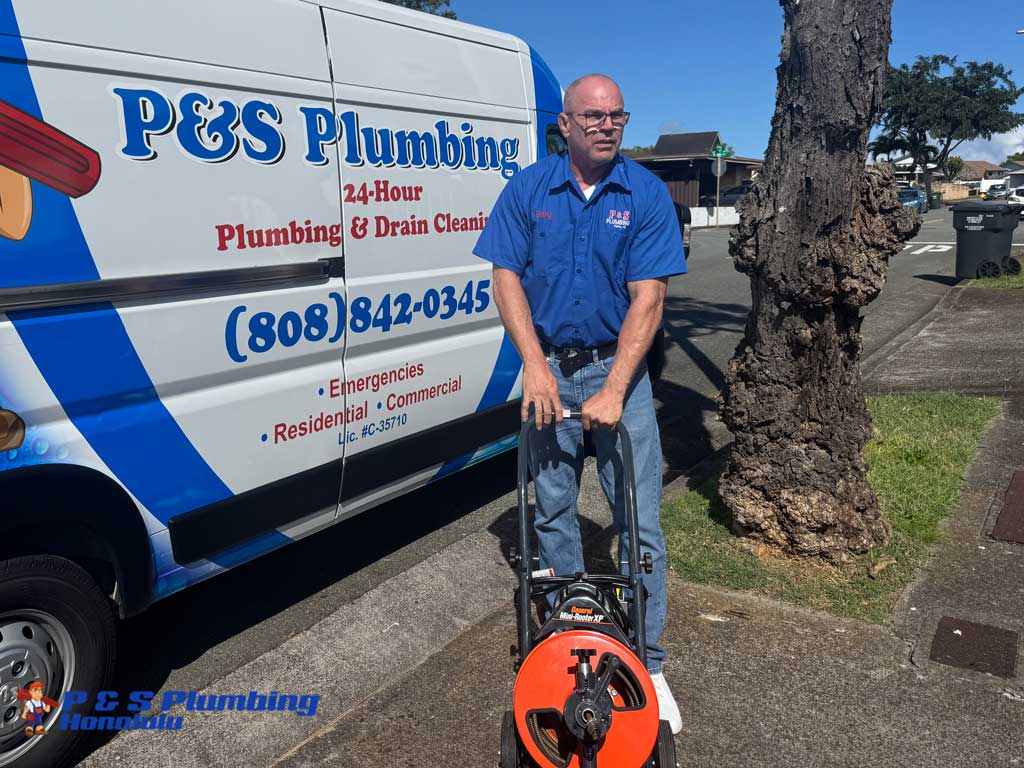
The same logic holds for drain cleaning. A simple stoppage can remain simple, or it can expose a more serious problem. If the contractor recommends additional work, that is the moment to revisit license status, permit needs, and who exactly will perform the repair.
Commercial properties need clearer answers, not looser ones
Commercial owners and managers sometimes assume that working with a larger service company automatically means licensing issues are already handled. Often they are, but assumption is not verification.
A commercial plumber working in offices, restaurants, retail spaces, or multi-unit properties may involve multiple crews, after-hours access, and maintenance contracts that spread across months or years. https://johnnymzro602.solsticebrief.com/posts/plumber-oahu-understanding-contractor-and-plumber-roles That makes accountability more important, not less. If a company rotates staff through your sites, ask how it ensures that licensed plumbers perform the actual plumbing work each time. Ask how permit-required work is flagged internally. Ask who within the company is responsible for maintaining current contractor licensing and renewal compliance.
These are not hostile questions. They are management questions. Any company accustomed to serving commercial accounts should be prepared for them.
Commercial work also has a way of blurring the line between service and project work. A call that starts as drain cleaning can become a larger repair recommendation. A recurring leak can turn into a more invasive correction. A facility issue that appears isolated can raise code and inspection questions. In those situations, clear licensing information protects both sides.
The local angle for Honolulu and Oahu customers
People searching for a plumber near me often want someone local, and that makes sense. A plumber Oahu residents can reach quickly may understand scheduling, traffic, and the practical realities of moving around the island. A plumber Honolulu customers use regularly may also be familiar with the local permitting environment.
Local familiarity is useful, but it should not replace verification. In fact, the opposite is true. Because local companies work repeatedly in the same communities, the licensed ones are usually accustomed to these questions. They know consumers can check status, expiration dates, and disciplinary history through the state’s system. They know Honolulu plumbing and drainage work authorized by permit is subject to inspection. They know local permitting guidance requires plumbing work to be performed by state-licensed contractors.
That local regulatory framework gives consumers something valuable: a clean basis for comparison. You do not need to guess who sounds more legitimate. You can ask, verify, and make a decision based on current status.
A practical way to handle the call before booking
Most customers are not looking to turn a service call into an interview. The good news is that you do not need a long script. You just need enough clarity to separate a professional operation from a risky one.
If you are calling about water heater repair, sewer line repair, leak detection, or an emergency plumber visit, explain the problem briefly and then ask the licensing questions before confirming the appointment. If you are planning larger work, ask those questions before setting an estimate meeting. If the company hesitates, that is part of the answer.
A useful sequence is this:
- Describe the issue and location.
- Ask whether the plumbing license is active and who will perform the work.
- Ask whether the job may require a permit or inspection.
- Verify the license status through the state tool before authorizing substantial work.
- Review expiration and any disciplinary history if the project is more than a minor service call.
That takes only a few minutes, and it puts the conversation on solid ground.
License status is not the whole decision, but it is the floor
Hiring a plumber always involves other judgments. Responsiveness matters. Communication matters. Clean work habits matter. So do price, scheduling, and whether the company explains the problem honestly. None of that changes the basic rule: current, verifiable license status is the floor, not the ceiling.
For Hawaii customers, the framework is clear enough to be useful in everyday decisions. Consumers can check license status, expiration date, and disciplinary history through official state tools. Plumbing work may require a licensed contractor when the project exceeds $1,500 in labor and materials or needs a permit. Plumbing and drainage work authorized by permit in Honolulu is inspected for compliance. Plumbing contractors must employ licensed plumbers to perform the actual plumbing work. Active plumbers in Hawaii also face current continuing competency requirements tied to the Uniform Plumbing Code, and contractor renewals follow a formal cycle.
Those details may sound administrative, but they are not remote from the service call. They shape who should be in your home or building, who should touch your plumbing system, and how confident you can be when the invoice is paid and the wall is closed.
If you remember only one thing when searching for a plumber near me, make it this: ask about license status early, ask specifically, and verify before the job moves beyond the very first response. That habit is simple, professional, and far less expensive than learning the answer after the work is done.